Meet Our Staff

Dr. Mehmet Akın BULUT
Coordinator of Innovative Learning and Teaching Coordination-Artificial Intelligence
Phone Number: 0212 692 02 12
E-Mail: [email protected]
Dr. Mehmet Akın Bulut, who completed his undergraduate education in the Department of English Language Teaching at Boğaziçi University, completed his doctoral studies in the field of Educational Technologies at Bahçeşehir University. During his doctoral education, he developed a micro-learning-based MOOC on teaching and teacher training through digital media. With 5 years of experience as a coordinator at the Innovative Learning and Teaching Center, Dr. Bulut also took on the role of founding and academically coordinating the Language School.
Currently, he serves as the Head of the Department of Educational Sciences at Ibn Haldun University, where he teaches courses in 'Adult Education and Lifelong Learning,' 'Educational Technologies,' and 'Information Technologies.' Furthermore, he has been involved in various projects supported by institutions such as John Templeton, the European Union, TÜBİTAK (The Scientific and Technological Research Council of Turkey), and the Ministry of National Education. He has published scholarly works in areas including 'Teacher Training,' 'Innovative Learning and Teaching,' 'Adult and Youth Education,' 'Active and Digital Learning,' 'Leadership in Digital Education,' and 'Digital Education and Training Models.'
Dr. Bulut conducts training sessions on topics related to adult and new-generation learning and teaching, teacher training and instructional design, e-learning design and digital tools, motivation models, active and autonomous learning strategies at university, K-12, and corporate levels. Throughout his career, he has established the Coordinatorship of Innovative Learning and Teaching-Artificial Intelligence at Ibn Haldun University, where he also serves as the coordinator, in addition to his role as the academic of Educational Sciences in the Faculty of Education.

Assist. Prof. Adem YURDUNKULU
Assistant Coordinator of Innovative Learning and Teaching Coordination-Artificial Intelligence
Phone Number: 0212 692 02 12
E-Mail: [email protected]
Assist. Prof. Yurdunkulu completed his primary, secondary, and high school education in Çankırı. He graduated third in rank from Nevzat Ayaz Anatolian Teacher Training High School. He earned his Bachelor’s degree in English Language Teaching from Istanbul University, his Master’s degree in Educational Administration and Supervision from Bolu Abant İzzet Baysal University, and his PhD in Educational Administration from Anadolu University, Eskişehir. As part of his doctoral research, he developed an Organizational Resilience Scale aimed at assessing the resilience of schools at the primary and secondary education levels in Türkiye. His research interests include leadership, supervision, organizational resilience, and educational administration. Assist. Prof. Yurdunkulu has served at various levels within the Ministry of National Education, including positions as a teacher and assistant principal. He believes in loving people unconditionally.
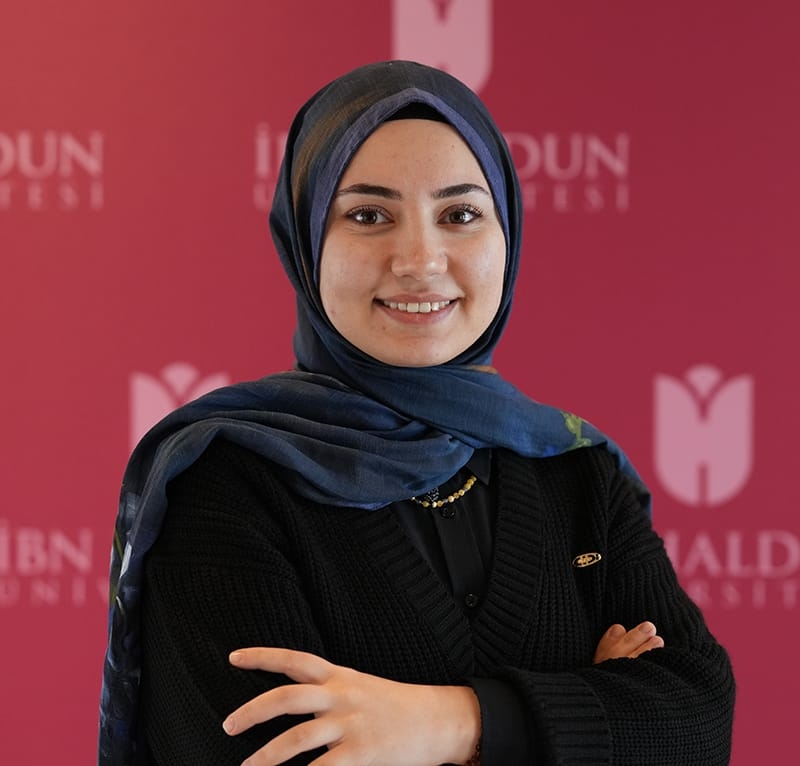
Feyza Gülsüm ALAKUŞ
Assistant Specialist of the Coordination of Innovative Learning and Teaching-Artificial Intelligence
Phone: 0212 692 02 12
E-Mail: [email protected]
She graduated in 2025 from Hacettepe University, Faculty of Education, Department of Computer Education and Instructional Technology. In the same year, she began her master’s studies in Artificial Intelligence Technologies in Education at Ibn Haldun University. During her undergraduate studies, she worked in the areas of digital learning environments, instructional design, mobile learning, distance education, artificial intelligence applications, and technology integration. She designed online course content at the Hacettepe Distance Education Application and Research Center, developed digital learning materials, and supported the effective use of LMS systems. She also coordinated the integration of technology into instructional processes. Within the scope of the Maarif Model, she contributed to the production of digital content for EBA, developing interactive activities, educational videos, and storyboard work suitable for the primary school level. She collaborated with interdisciplinary teams to design scripts, visual materials, and audio assets.
As a Search Engine Quality Evaluation Specialist, she assessed Yandex search queries in terms of content accuracy and contextual relevance, contributing to the quality control processes of artificial intelligence algorithms. She served as an instructor and assistant instructor at the Robotics Coding Academy and in BTK Academy’s middle school-level courses, teaching algorithms, basic coding, sensor usage, and block-based programming. She also prepared workshop content and instructional materials.
As a volunteer instructor in the “Basic Digital Skills” project organized by EDUSER, she provided online training to a group of university students with limited digital competence on AI literacy, safe internet use, remote access tools, and copyright. She is conducting an individual research project titled “Examining the Responses Provided by a Generative AI Assistant in the Context of Programming Education,” which was supported by the TÜBİTAK 2209-A Undergraduate Research Projects Support Program. The project outputs were presented at the ICETOL 2025 conference as a paper titled “Student Trust and Critical Evaluation of AI Responses in Introductory Programming Education.”
As a Search Engine Quality Evaluation Specialist, she assessed Yandex search queries in terms of content accuracy and contextual relevance, contributing to the quality control processes of artificial intelligence algorithms. She served as an instructor and assistant instructor at the Robotics Coding Academy and in BTK Academy’s middle school-level courses, teaching algorithms, basic coding, sensor usage, and block-based programming. She also prepared workshop content and instructional materials.
As a volunteer instructor in the “Basic Digital Skills” project organized by EDUSER, she provided online training to a group of university students with limited digital competence on AI literacy, safe internet use, remote access tools, and copyright. She is conducting an individual research project titled “Examining the Responses Provided by a Generative AI Assistant in the Context of Programming Education,” which was supported by the TÜBİTAK 2209-A Undergraduate Research Projects Support Program. The project outputs were presented at the ICETOL 2025 conference as a paper titled “Student Trust and Critical Evaluation of AI Responses in Introductory Programming Education.”